 by
by Life doesn’t pause just because you need an official signature. Whether you’re on a business trip, visiting family out of state, or simply can’t get away from home, the need for a notarized document can feel like a major roadblock. This is where the incredible flexibility of using an online notary in Ohio becomes a lifesaver.
As long as the notary is physically located in Ohio during the video session, you, the signer, can be anywhere in the world. This guide explains how this modern convenience works, what you need to get started, and how to finalize important real estate, legal, or personal documents from anywhere.
Key Takeaways
- Notarize Your Documents Legally from Anywhere: Ohio fully approves remote online notarization (RON), which lets you use a secure video call to get documents legally notarized. While the notary must be in Ohio, you can be located anywhere during the session.
- The Process Requires Just Three Things: To get started, you only need a digital copy of your unsigned document, a valid government-issued photo ID for identity verification, and a device with a camera and microphone for the live video session.
- Compare Platforms on Key Factors: When choosing a service, first confirm it is authorized by the state of Ohio. Then, check that it handles your specific document type and compare pricing, which is capped by the state at $25 per notarization plus a small platform fee.
What Is an Online Notary in Ohio?
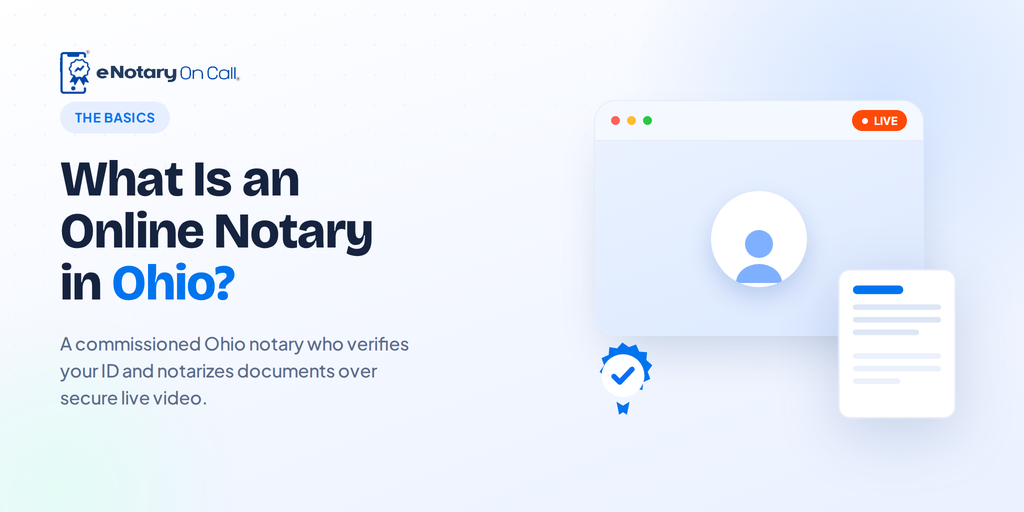
An online notary in Ohio offers a way to get your important documents legally notarized without leaving your home. Officially known as Remote Online Notarization (RON), this process allows you to connect with a commissioned Ohio notary public through a secure video call. Instead of scheduling an in-person meeting, you can use any internet-connected device with a camera and microphone, like your laptop, tablet, or smartphone, to complete the entire process from virtually anywhere.
This modern approach is a game-changer if you have a tight schedule, limited mobility, or are located far from a traditional notary. The entire session is recorded, and your identity is verified using sophisticated technology, making it a secure and reliable alternative to a face-to-face meeting. Think of it as having a notary on demand, ready to help you finalize your documents whenever you need them.
The state of Ohio has established clear rules for these services, ensuring that every online notarization is just as valid and legally binding as one done with pen and paper. So whether you’re finalizing a real estate transaction, signing a power of attorney, or completing an affidavit, RON provides a convenient, secure, and officially recognized method for handling your notarial needs. It simplifies what used to be a logistical hurdle into a straightforward digital task.
How Does Remote Online Notarization (RON) Work?
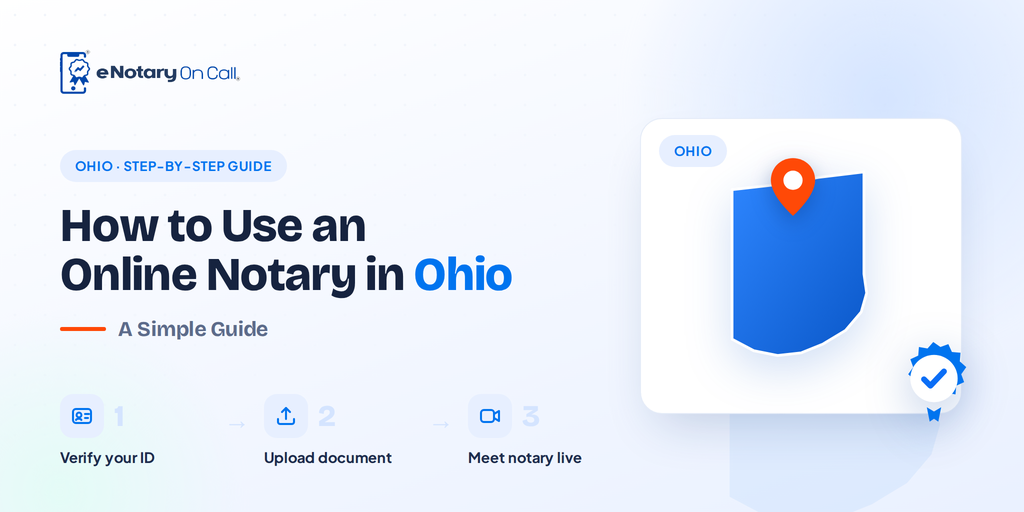
The process for remote online notarization is designed to be simple and user-friendly. It generally follows a few key steps. First, you’ll upload a digital version of the document you need notarized to a secure online platform. Next, you’ll go through an identity verification process, which typically involves answering a few personal questions and taking a picture of your photo ID.
After your identity is confirmed, you’ll be connected to a live notary public via a two-way video call. The notary will witness you electronically sign the document and will then apply their own digital signature and electronic seal. Once the session is complete, you’ll receive the fully notarized document in your email, ready to be saved or shared.
Online vs. Traditional Notarization: What’s the Difference?
While both online and traditional notarizations produce a legally binding document, the key difference lies in the requirement for physical presence. With traditional notarization, you and the notary must be in the same room. Remote online notarization eliminates that requirement. For a valid Ohio RON, the notary must be physically located within the state, but you, the signer, can be anywhere in the world.
It’s also helpful to know that RON is different from “eNotarization.” An eNotarization still requires you to be physically present with the notary; you just sign documents electronically on a tablet or computer. RON is the only method that is fully remote. To perform these remote services, notaries must obtain special approval from the Ohio Secretary of State, demonstrating that they have the appropriate training and technology.
Is Online Notarization Legal in Ohio?
Yes, absolutely. Online notarization is fully legal and regulated in Ohio, providing a convenient and secure way to have your documents notarized. Instead of finding and traveling to a traditional notary, you can complete the entire process from your home or office.
All you need is a device with a camera and microphone, like a laptop or smartphone, and an internet connection. The state has established clear rules to make sure online notarizations are safe, valid, and legally binding, offering a modern alternative to the in-person process.
Ohio’s Rules for Online Notarization
Ohio has specific laws that outline how online notarization works. An authorized online notary public can perform most of the same notarial acts they would in person, just over a secure video connection. One of the most important rules is that an electronically notarized online document is considered an original, not a copy.
This means it carries the same legal weight as a document with a traditional ink stamp. These regulations ensure that the process is not just convenient but also fully legitimate and recognized by courts and government agencies across the state.
Where You and the Notary Need to Be?
This is where online notarization offers incredible flexibility. As the signer, you can be located almost anywhere in the world during the video session. Whether you’re at home in Cleveland, on a business trip in California, or even vacationing abroad, you can get your document notarized.
The one key requirement is that the notary be physically present in Ohio when performing the notarization. This ensures the act is conducted under Ohio law, while giving you the freedom to sign from a location that works for you.
How Your Identity Is Verified Online
Security is a top priority, and verifying your identity is a critical step. Before the notary can sign, they must confirm you are who you say you are. The identity verification process is straightforward and occurs directly during the video call. You will be asked to present a valid government-issued photo ID, such as a driver’s license, state ID card, or passport.
The notary will examine the ID on camera to check its security features and confirm that the photo matches you. Some platforms may also ask a few security questions based on your personal history to add another layer of protection.
What Happens to Your Records
After you and the notary sign the document during your live video session, the process is nearly complete. The notary will apply their digital seal and signature, finalizing the notarization. Immediately after, you will receive a secure digital copy of the fully notarized document, usually by email or through the platform’s secure portal.
It’s important to remember that these online notarizations hold the same legal authority as traditional paper ones. You can then save, print, or share the electronic file as needed, confident that it is a legally valid original document.
What Documents Can You Notarize Online in Ohio?
The great thing about online notarization is that you can process many different documents from your home or office. Ohio has approved a wide range of paperwork for remote notarization, which is a huge time-saver. Still, there are a few exceptions to keep in mind. Knowing what’s eligible ahead of time will make your experience smooth and simple. Here’s a breakdown of the documents you can and cannot get notarized online in the state.
Common Documents for Online Notarization
You’ll be happy to know the list of documents you can notarize online is quite long. This flexibility covers many of the most common reasons people need a notary in the first place. From real estate transactions to personal legal forms, you can handle it all through a secure video call.
Some of the most common documents an Ohio electronic notary can handle include:
- Real estate documents, including those for closings and loan modifications
- Vehicle titles and registration forms
- Various loan documents for commercial, FHA, and veteran loans
- Affidavits, like a general affidavit or an affidavit of compliance
- Oaths for official positions, such as for a credit union officer
- Applications for different licenses and permits
Documents You Can’t Notarize Online
While online notarization is incredibly versatile, there are some firm boundaries. The most significant restriction in Ohio involves documents used in legal proceedings. Specifically, an online notary cannot take or certify a deposition. A deposition is a witness’s sworn, out-of-court testimony recorded for use in a lawsuit, and it still requires a traditional in-person process.
This rule is in place to maintain the specific legal protocols surrounding court evidence. The Ohio Revised Code clearly outlines the powers and limitations of online notaries, so it’s always a good idea to confirm your document type is eligible before you start the process. If you need a deposition certified, you will have to schedule an appointment with a traditional notary.
How to Get a Document Notarized Online: A 4-Step Guide
Getting a document notarized online might sound complicated, but it’s actually a straightforward process. Once your document is ready, you can complete the notarization from your computer in just a few steps. Think of it as a secure video call where you sign a document in front of a licensed professional. Let’s walk through exactly what you need to do.
Step 1: Prepare Your Document
First, you’ll need a digital copy of the document you want notarized from an online notarization provider. Make sure it’s the complete, final version, but don’t sign it yet. You’ll do the signing part later during the live session with the notary. The best format for this is usually a PDF, as it’s secure and universally accepted by online notary platforms.
You can scan a physical paper or save a digital file as a PDF. Once you have your file ready, you’re prepared to upload it to the notary service of your choice.
Step 2: Choose an Online Notary Service
Next, you’ll need to select an online notary platform. It’s important to use a service that is authorized to perform remote online notarizations in Ohio. The state has a list of approved technology providers to ensure the process is secure and legally binding.
Platforms such as the approved online notarization networks or Ohio Electronic Notary connect you with a commissioned remote online notary. Take a moment to browse a few options to see which one feels like the best fit for you based on their interface and pricing.
Step 3: Verify Your Identity
Before you can meet the notary, you have to confirm you are who you say you are. This is a critical security step that protects you and the integrity of your document. The platform will guide you through a secure identity verification process. This typically involves two parts: scanning a government-issued photo ID (like your driver’s license) and answering a few personal questions based on your public record history. This is known as knowledge-based authentication, and it’s a standard way to verify identity online.
Step 4: Meet Your Notary and Sign
This is the final step, where notarization occurs. You’ll connect with a licensed Ohio notary public through a live, two-way video call. During the call, the notary will confirm your identity one more time, witness you electronically sign the document, and answer any questions you have about the process.
After you’ve signed, the notary will complete the notarization by affixing their own electronic seal and digital signature. The platform will then make the fully notarized document available for you to download, save, and share.
Popular Online Notary Platforms for Ohio
Once you’re ready to get your documents notarized online, the next step is picking a platform. A quick search will show you there are plenty of options, which can feel a little overwhelming. The good news is that Ohio authorizes many different services, giving you the flexibility to choose one that fits your needs and budget. Most of these platforms operate similarly: you upload your document, verify your identity, and connect with a live notary through a video call.
The main differences usually come down to pricing, availability, and user interface. Some are available 24/7, which is perfect for last-minute needs, while others might specialize in certain types of documents or integrate with software you already use. To help you get started, I’ve put together a list of a few popular and reliable online notary platforms that are authorized for use in Ohio. Think of this as a starting point to help you find the service that works best for you.
Look for speed and secure identity verification
An online notarization provider is one of the most well-known names in the online notary space. The platform’s biggest draw is its convenience, offering access to licensed Ohio notaries 24 hours a day, 7 days a week. This makes it an excellent choice if you have an urgent request or a schedule that doesn’t fit traditional business hours.
The company focuses on making the process feel simpler and more secure than in-person notarization. You can handle everything from your computer or smartphone, connecting with a notary in just a few minutes. Their process is straightforward, guiding you through each step from uploading your document to the final signature.
Look for secure video sessions and audit trails
An online notarization provider provides a fully digital service designed for ease of use. The platform allows you to connect with a commissioned notary public through a secure video conference, ensuring your entire session is private and protected. It’s a great option for anyone who values a simple, no-fuss experience.
You can use it for a wide range of documents, and the platform is built to handle international transactions, which is a plus if you or your document signers are located outside the United States. An online notarization provider prides itself on its professional service and secure environment, making it a trusted choice for both personal and business needs.
Look for document workflow compatibility
If you’ve ever signed a document electronically, you’ve probably heard of an eSignature platform. The company now offers an approved remote online notarization platform that integrates it directly into its popular eSignature workflow. This is a fantastic option if you or your business already use an eSignature platform, as it creates a seamless experience from start to finish.
You can upload your documents, complete the identity verification process, and connect with a live notary all within the same familiar platform. It combines the security and reliability of an eSignature platform with the convenience of online notarization, making it a powerful tool for streamlining official paperwork.
Ohio Electronic Notary
As its name suggests, Ohio Electronic Notary is a service that specifically caters to residents of the Buckeye State. It offers two distinct services that provide considerable flexibility. First, their electronic notary service lets you get documents notarized online 24/7 from anywhere in the world.
Second, they offer a mobile notary service where a notary will travel to your location within their service area for an in-person signing. This dual offering makes Ohio Electronic Notary a versatile choice, whether you prefer the convenience of a remote session or need the personal touch of a mobile appointment.
How to Choose the Right Online Notary Service
With so many options available, picking the right online notary service can feel like a chore. But taking a few minutes to compare platforms can save you time, money, and potential headaches down the road. The best service for you will be one that is legally recognized by the state of Ohio, equipped to handle your specific documents, and fits your budget and schedule. Think of it like choosing any professional service; you want someone qualified, experienced with your needs, and transparent about their costs.
A great online notary platform offers more than just a digital signature. It provides peace of mind. You need to trust that the process is secure and that your notarized document will be legally sound. Some platforms are built for one-off personal documents, while others are designed for complex business or real estate transactions.
By focusing on a few key areas, you can confidently select a service that makes the entire process smooth and stress-free. We’ll walk through the three most important things to look for: state approval and security, document compatibility, and pricing.
Check for State Approval and Security
First and foremost, you need to confirm that the platform is legally authorized to operate in Ohio. The good news is that Remote Online Notarization (RON) is fully legal and regulated here. However, the notaries themselves must be specifically commissioned by the state to perform these digital acts. The Ohio Secretary of State maintains a list of authorized remote online notaries, so you can always verify a provider’s credentials. This step is non-negotiable and ensures your document will be legally binding.
Beyond legality, look for a service that takes your security seriously. You’re handling sensitive documents and personal information, so robust security is a must. Reputable platforms use strong encryption and security protocols to protect your data. Look for mentions of compliance with standards such as SOC 2, which indicates they follow strict information security practices. This ensures your session is private and your documents are protected from unauthorized access.
Confirm They Handle Your Document Type
Before you upload anything or enter your credit card information, double-check that the service can handle your specific document type. While online notaries can process a wide variety of paperwork, they don’t all handle the same types. Most platforms are equipped to notarize a wide range of documents, including affidavits, loan documents, vehicle titles, and real estate closing papers.
However, some complex documents or those requiring special procedures might not be supported by every platform. The easiest way to find out is to check the company’s website, usually in an FAQ or “supported documents” section.
Taking a minute to confirm this upfront can prevent you from going through the entire identity verification process only to discover the platform can’t help you. It’s a simple step that guarantees you’re in the right place from the start.
Review Pricing and Availability
Finally, consider the cost and convenience. In Ohio, the state sets a maximum fee that notaries can charge. For online services, Ohio notaries may charge up to $25 per notarization, and the platform might add a separate technology fee. Because prices vary, it’s smart to compare a few different services to see what they charge for a single notarization.
Availability is another huge advantage of online notarization. Many platforms offer access to notaries 24 hours a day, 7 days a week, which is a game-changer if you have a tight deadline or an unconventional schedule. You’re no longer limited to standard business hours. When comparing services, check their hours of operation and typical wait times to find a platform that aligns with your needs and budget.
How Much Does Online Notarization Cost in Ohio?
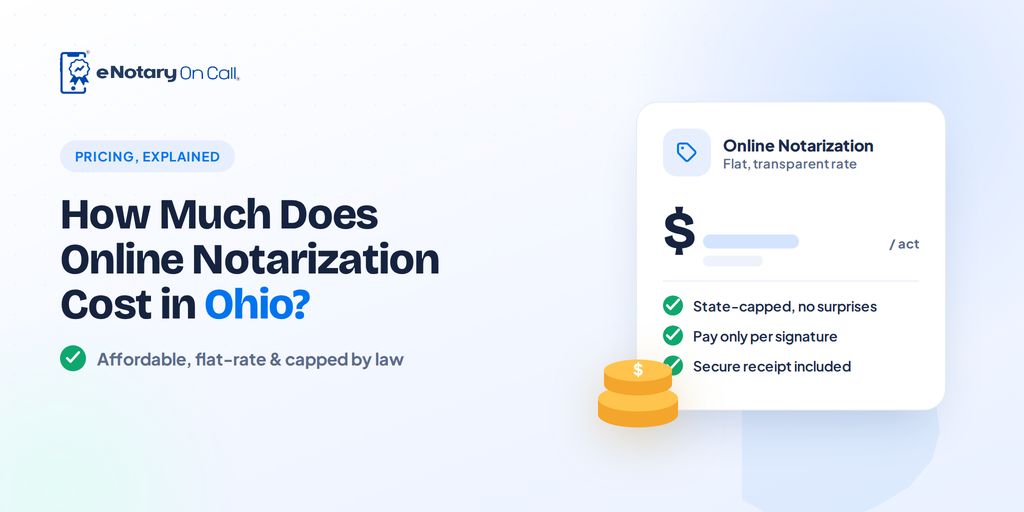
When you need a document notarized online, one of the first questions is usually about the cost. The good news is that pricing is pretty straightforward and regulated by the state. The total price you pay typically combines the notary’s fee for their service and a technology fee charged by the platform that connects you.
This structure keeps costs predictable and transparent for everyone involved. Let’s break down what you can expect to pay for remote online notarization in Ohio.
Are There Any Additional Costs?
For the most part, the price you see is the price you pay. One of the benefits of online notarization is that you don’t have to worry about extra costs, such as travel fees that a mobile notary might charge for an in-person meeting. However, it’s always a good idea to read the fine print.
Some platforms might offer different pricing tiers or subscription models for businesses that need frequent notarizations. For a one-time personal document, you’ll likely just pay the single session fee. The rules for remote notaries in Ohio are designed to keep the process transparent, so you shouldn’t run into many surprise charges.
How to Become a Remote Online Notary in Ohio
If you’re already a Notary Public in Ohio, you’re in a great position to expand your services. Becoming a Remote Online Notary (RON) allows you to notarize documents for people anywhere, using audio-visual technology. The process is straightforward and involves just a few key steps: meeting the state’s requirements, getting the right tech, and submitting your application. Let’s walk through exactly what you need to do to get started.
Meet the Eligibility and Training Requirements
Before you can perform online notarizations, you must already hold an active commission as a traditional Notary Public in Ohio. The basic requirements are being at least 18 years old and a legal resident of the state (or an attorney practicing here), with a clean record free of disqualifying crimes.
From there, you’ll need to complete a two-hour training course and pass an exam from a state-approved provider. This training ensures you understand the specific rules and procedures for handling notarizations remotely and securely, setting you up for success.
Get the Right Technology
To conduct remote notarizations, you’ll need a specific tech setup. Your workspace should include a computer with a webcam and microphone, along with a secure, reliable internet connection. More importantly, you must choose a RON technology provider that complies with Ohio’s regulations.
These platforms provide a secure audio-visual connection for the notarization session. Your chosen provider will also help you obtain the necessary digital tools: an electronic seal to affix to documents, an electronic journal to log your notarial acts, and a digital certificate to create your unique electronic signature.
Submit Your Authorization Application
Once you’ve completed your training and selected your technology provider, you’re ready for the final step. You’ll need to submit your Online Notarization Authorization application through the Ohio Secretary of State’s website. The online form is simple to fill out. You will be asked to upload PDF copies of your training course and exam completion certificates, so have those ready.
After you provide your information and upload your documents, you’ll pay the $20 application fee online to complete the process. The Secretary of State’s office will then review your application and notify you of your authorization.
Frequently Asked Questions
1. Do I have to be in Ohio to use an Ohio online notary?
No, you don’t! That’s one of the biggest benefits of the process. You can be almost anywhere in the world during the video session. The only location requirement is that the remote online notary be physically located within Ohio’s borders when performing the notarization. This ensures the act is done under Ohio law while giving you complete flexibility.
2. Is an online notarization as official as a traditional one?
Yes, it is absolutely official. Ohio law specifically states that a document notarized remotely online is considered a legal original and carries the same weight as one with a traditional ink stamp and signature. As long as you use a state-authorized platform, your document will be fully valid and recognized by courts and government agencies.
3. What do I need to have ready before I start an online notarization?
The process is pretty simple. You will need three things: a digital copy of the document you need notarized (usually a PDF), a valid government-issued photo ID, such as a driver’s license or passport, and a device with a camera, microphone, and a stable internet connection, such as a laptop or smartphone. Just make sure you don’t sign the document until you are live with the notary.
4. How do I know the online notarization process is secure?
Security is a top priority for these services. The platforms use multiple layers of protection. Your identity is confirmed through a process that involves checking your photo ID and sometimes asking personal questions that only you would know. The entire video session is recorded and stored securely, and the platforms use strong encryption to protect your personal information and documents from any unauthorized access.
5. How much should I expect to pay for a single online notarization?
The cost is regulated by the state, so it’s very predictable. An Ohio remote notary can charge up to $25 for their service, and the platform you use can add a technology fee of up to $10. This means the total cost for a notarization will not exceed $40. Many platforms charge a flat fee for the first signature and a smaller fee for each additional signature in the same session.