 by
by Quick Answer: An apostille is a form of authentication used to verify documents for use in participating foreign jurisdictions. You may first need notarization (depending on document type), followed by apostille processing through the appropriate authority to prepare documents for international use. Understanding the difference between notarization and an apostille is one of the most important steps in avoiding delays.
International paperwork sounds simple until you actually start doing it. You gather documents. You think they’re ready. Then someone says, “This document needs an apostille.”
Suddenly, new questions appear –
- What exactly is an apostille?
- Is notarization enough?
- Do I need both notarization and apostille?
- Who issues the apostille?
- Can documents be notarized online before international submission?
And one of the biggest misconceptions is that people assume notarization and apostille mean the same thing. They do not. A notary and an apostille serve different purposes, even though they are often used together.
So, let’s explain what an apostille is, how notarization fits into the process, and how to prepare documents for international use more efficiently.
What Is an Apostille?
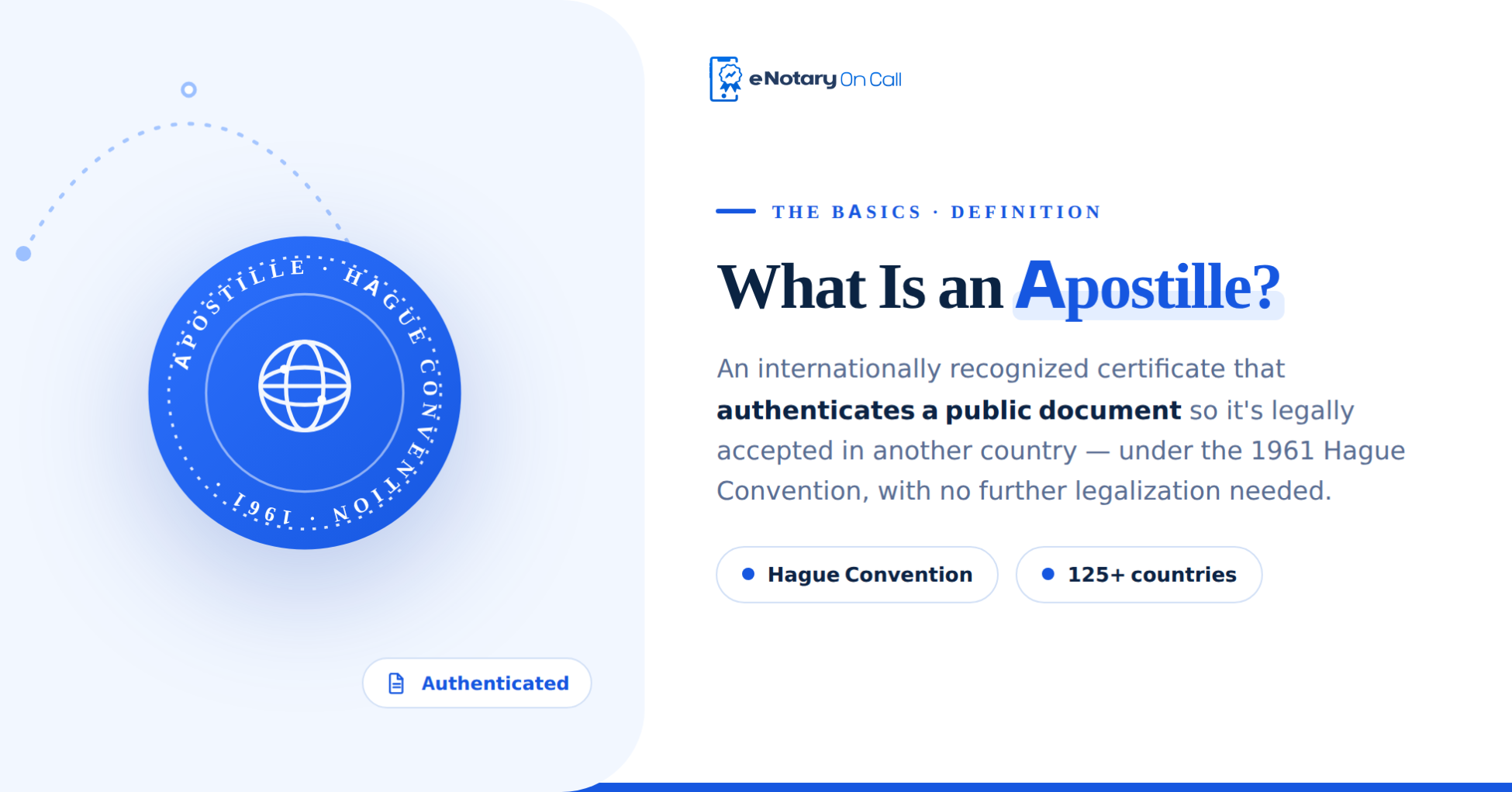
An apostille is a certification process used to authenticate certain documents for international recognition. In simple terms, it helps confirm that a document or signature has been properly authenticated for international acceptance, where applicable.
An apostille is commonly used for international education, immigration paperwork, marriage abroad, property transactions, and international business documents.
Key Insight: An apostille generally authenticates the document’s official execution, not the truth of its content.
Why People Need Apostille Services?
International paperwork often requires extra verification. Examples include –
- Studying Abroad – Educational documents may require authentication.
- 2. Working Internationally – Employment paperwork sometimes needs additional validation.
- Marriage outside the Country – Personal records may require international acceptance.
- International Property Transaction – Ownership and authorization documents may require additional processing.
- Business Expansion – Cross-border paperwork often involves authentication requirements.
Why It Matters – International document rules frequently involve more than just signatures.
Apostille vs Notarization: Understanding the Difference
This is where most confusion begins. A notary generally verifies identity, witnesses signatures, and completes notarial certification. While an apostille generally authenticates the executed document for international use and confirms that official recognition processes were followed.
Key Insight: Notarization often happens first. An apostille may happen afterwards.
Do All International Documents Need Notarization Before Apostille?
Not necessarily. Requirements often depend on document type, issuing authority, destination requirements, or submission instructions. Some documents may already be official records. Others may first require notarization.
What Types of Documents Commonly Need an Apostille?
Examples may include –
- Powers of Attorney
- Affidavits
- Birth records
- Marriage documents
- Educational records
- Authorization forms
- Business agreements
- Property documents
- Consent forms
Document category often determines the preparation path.
When Does Notarization Become Necessary?
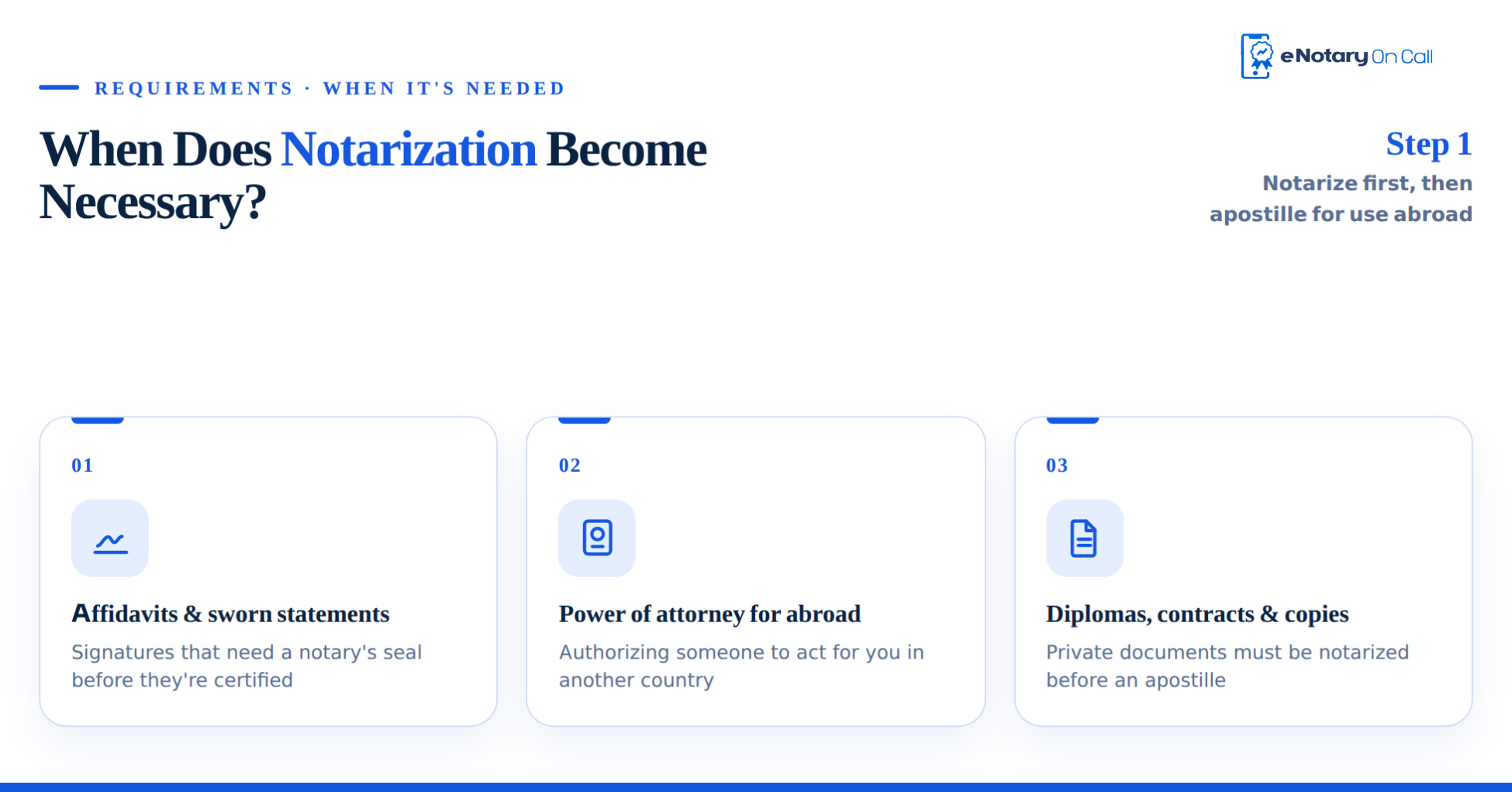
Notarization commonly appears when documents are privately prepared, signatures must be verified, and identity must be confirmed. Examples include affidavits, authorizations, Power of Attorney, and consent documentation.
Why It Matters: The notary generally validates execution, not international acceptance.
Step-by-Step: How to Prepare Documents for International Use
Step 1 – Confirm International Requirements: Before doing anything, check destination requirements, document instructions, and authentication expectations. Starting with requirements often prevents the need to repeat the process later.
Step 2 – Prepare the Document: Review names, dates, completeness, and signature areas. Do not sign early because administrative errors cause more delays than people expect.
Step 3 – Get Documents Notarized (If required): The notary generally verifies identity, witnesses execution, and completes certification. Many users choose remote notarization to reduce travel and scheduling friction with eNotary on Call. Notarization may become the foundation for later authentication.
Step 4 – Submit for Apostille Processing: Documents may move to apostille processing after notarization. So, review required copies, submission instructions, and processing expectations. An apostille is often a separate process, not something completed by the notary.
Step 5 – Review and Store Final Documents: Before submission, confirm that all signatures, certifications, and supporting documents are in proper order. Store backup copies because international paperwork often becomes difficult to recreate quickly.
Can You Get Documents Notarized Online Before Apostille?
In some situations, remote notarization may be available depending on document requirements and acceptance expectations. Online notarization may allow users to upload documents, verify identity, join a live session, and complete execution remotely.
Why It Matters: Reducing travel often makes international preparation less stressful.
Common Mistakes People Make During Apostille Preparation
These issues appear frequently.
- Confusing Notarization with an Apostille
- Signing Before Meeting the Notary
- Missing Instructions
- Sending Incomplete Documents
- Waiting Until Travel Deadlines
Key Insight: Preparation mistakes usually create bigger delays than processing itself.
Why More People Use eNotary On Call Before International Submission?
Many users choose eNotary On Call because they want document execution to feel easier. Benefits may include remote access, flexible scheduling, reduced travel, secure identity verification, and faster preparation.
International paperwork already involves enough moving parts, so it’s nice to complete the notarization part conveniently and quickly.
What Happens If Your Apostille Request Gets Rejected?
This is one of the least discussed parts of international document preparation. People often assume apostille processing works like a simple stamp-and-return process. But rejection happens more often than expected. Common reasons include –
Incorrect Document Type: Submitting the wrong version of a document can delay the process. Examples include draft copies, missing pages, uncertified records, or improper document formats. The problem is often not the apostille itself. It’s usually the document preparation.
Missing Notarization Where Required: Some privately prepared documents may require notarization before apostille processing. Skipping this step may result in rejection or requests for corrections. Examples may include affidavits, authorization letters, consent forms, and a Power of Attorney. People frequently spend more time correcting rejected paperwork than preparing correctly from the beginning.
Signature and Execution Errors: Small mistakes create larger problems. Examples include signing too early, missing signatures, incorrect dates, or incomplete execution sections. Perform one final review as if you were receiving the document, not submitting it, before submitting the documents.
Final Thoughts
Understanding the difference between notarization and apostille can save a surprising amount of time. Notarization generally helps verify execution, and an apostille generally helps support international document acceptance.
International paperwork can feel far less overwhelming when you know which steps apply and how to prepare documents correctly. And getting documents prepared for international use can become one of the easiest parts of the process with eNotary on Call.
Frequently Asked Questions
1. What is an apostille in simple terms?
An apostille is generally a form of authentication used to support the recognition of certain documents for international use. It helps confirm that the document went through recognized execution or certification processes before being presented abroad.
2. Do I always need notarization before getting an apostille?
Not always. Whether notarization is necessary often depends on the type of document and how it was originally issued. Some documents may already exist in an official form, while others may require notarized execution first.
3. Can I get my documents notarized online for international use?
In some situations, remote notarization may be available depending on applicable requirements and document acceptance expectations. Online notarization may allow users to complete identity verification and execution without scheduling in-person appointments.
4. How long does apostille preparation usually take?
Timing varies depending on document preparation, notarization needs, processing expectations, and submission procedures. In many situations, delays happen because documents are incomplete rather than because authentication itself takes too long.
5. Why do people choose eNotary On Call before apostille processing?
Many users choose eNotary On Call to complete notarization without unnecessary travel or appointment coordination. Remote access often makes international document preparation feel less stressful.

Anjali is a Senior Content Writer at eNotary On Call, specializing in online notarization, legal documentation, and compliance, helping readers navigate important processes with ease and confidence. Outside of work, Anjali enjoys traveling, cooking, and reading.