 by
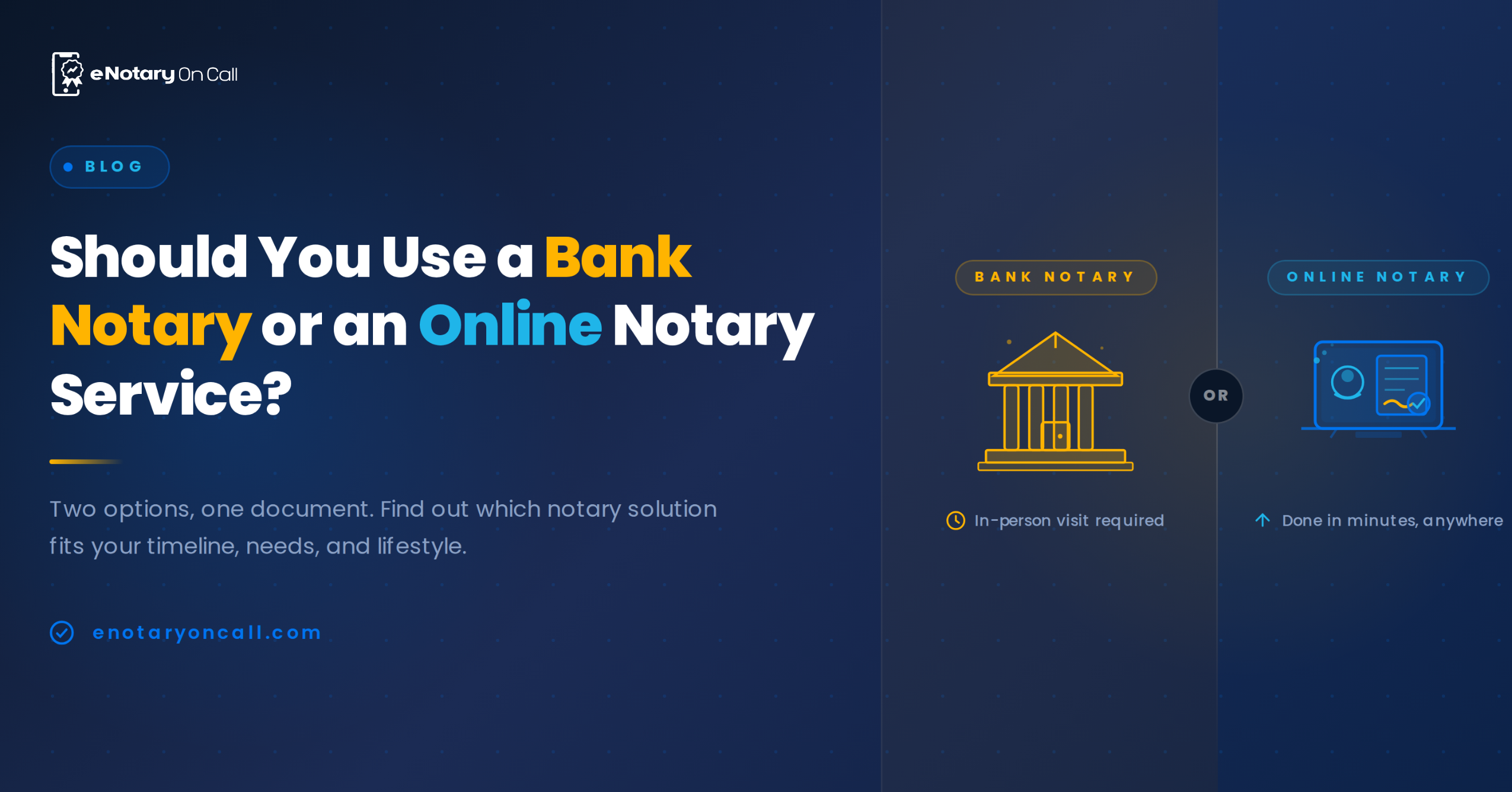
by An online notary service is often the easier choice if convenience, flexibility, and remote access matter most because you can complete notarization from anywhere. A bank notary may work well for certain documents if you already bank with a financial institution and prefer in-person service. The best option depends on availability, urgency, document type, and your overall experience priorities.
Once you have the document prepared, you need it notarized. You remember hearing that banks sometimes offer notary services. But you also see online notary platforms promising to complete notarization remotely in minutes. So naturally, the question comes: Should you use a bank notary or an online notary service?
Both complete the same work by completing the notarization. The differences become much more noticeable once you actually start the process. One option may require branch visits, limited hours, and customer eligibility. The other may allow you to complete everything remotely from your home, office, or even while traveling. So, let’s compare Bank Notary vs Online Notary Service, explain where each option works best, and help you decide which one makes the most sense for your situation.
What is a Bank Notary?
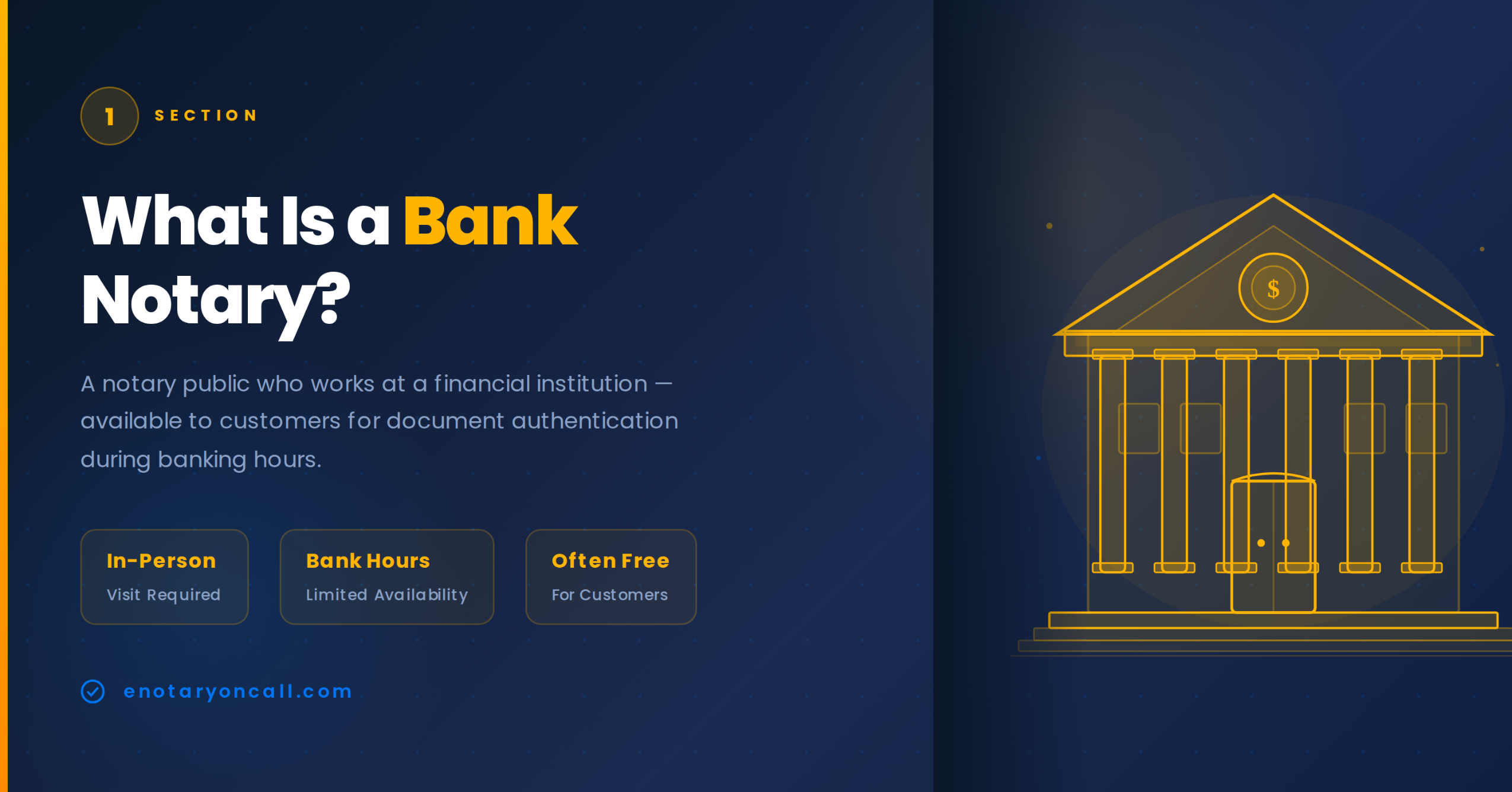
A bank notary is a commissioned notary who provides notarization services through a bank or credit union. Banks may offer notarization for account holders, existing customers, selected legal documents, or financial paperwork.
Common examples include affidavits, Power of Attorney, authorization forms, and certain estate documents. Availability varies by institution and branch.
Key Insight: Many people assume every bank employee can notarize documents, but not all branches have commissioned notaries available every day.
What is an Online Notary Service?
An online notary service allows individuals to complete notarization remotely using secure identity verification and live video technology. The process generally includes –
- Uploading documents
- Verifying identity
- Meeting with a notary remotely
- Signing electronically
- Receiving completed documents digitally
Services like eNotary On Call make this possible without requiring branch visits or appointments.
Why It Matters: Online notarization changes one major thing: location no longer becomes part of the process.
Bank Notary vs Online Notary Service: Side-by-Side Comparison
- Travel Required – A Bank notary usually requires travel, while an online notary works remotely.
- Appointment Dependency – You have to depend on appointments when working with a Bank notary, while there is a lot less dependency with online notary options.
- Availability – It is limited by the bank branch and is more flexible with online notary options.
- Remote Access – Bank notaries need you to be present physically, and online notaries provide the remote access option.
- Hours – You can only visit a Bank during branch hours, and it is very flexible with online notaries.
- Digital Completion – You usually get the physical notarized document from the bank, while it is completed digitally with notaries.
- Convenience – Bank notaries provide a moderate level of convenience, while it is also higher with online notary options.
Key Insight: Both options perform notarization, but the experience surrounding the process can feel completely different.
When a Bank Notary Makes More Sense
Banks may work well when –
- You already bank there
- You prefer in-person interaction
- Your document process is already physical
- Your schedule aligns with branch hours
Examples include financial paperwork, account-related documentation, and internal bank forms.
Why It Matters: Some people simply feel more comfortable completing legal paperwork face-to-face.
When an Online Notary Service May Be the Better Choice?
Online notarization often becomes attractive when –
- You need faster access
- Travel is inconvenient
- You have a busy schedule
- You work remotely
- You need evening flexibility
Common examples include Power of Attorney, affidavits, travel consent forms, estate planning documents, and authorization paperwork.
Pro tip: Convenience becomes especially valuable when notarization is one of several steps in a larger legal process.
Availability: Which Option Is Easier to Access?
Availability is often where people notice the biggest difference. Availability of a bank depends on branch staffing, business hours, customer eligibility, and appointment requirements.
An online notary offers remote completion, flexible scheduling, and shorter wait times.
According to the Data Insight Report, the booming online notary service market is projected to reach $6.1 billion by 2033, driven by remote work. The data reveal the gradual increrase of online notarization demand among the people and how it has become the new thing for the US Citizens.
Key Insight: People often underestimate how much time is spent coordinating. Notarization itself usually takes only a few minutes.
Speed Comparison: Bank Notary Vs Online Notary
Speed is not only about signing. It includes travel time, scheduling, waiting, and document preparation. With the bank notary process, you have to –
- Call ahead
- Confirm availability
- Travel to the branch
- Wait for service
- Complete signing
With Online notaries –
- Upload document
- Verify identity
- Meet online
- Complete notarization
Why It Matters: The actual notarization is often fast either way; the surrounding logistics create most of the difference.
Can Banks Notarize Every Document?
Not necessarily. Some banks may limit the type of document, customer eligibility, or the number of notarizations. Examples of documents that sometimes require additional confirmation are real estate paperwork, healthcare directives, and estate planning documents.
Key Insight: Document acceptance policies may still apply, even if a branch offers notarization.
What Documents Are Commonly Notarized Online?
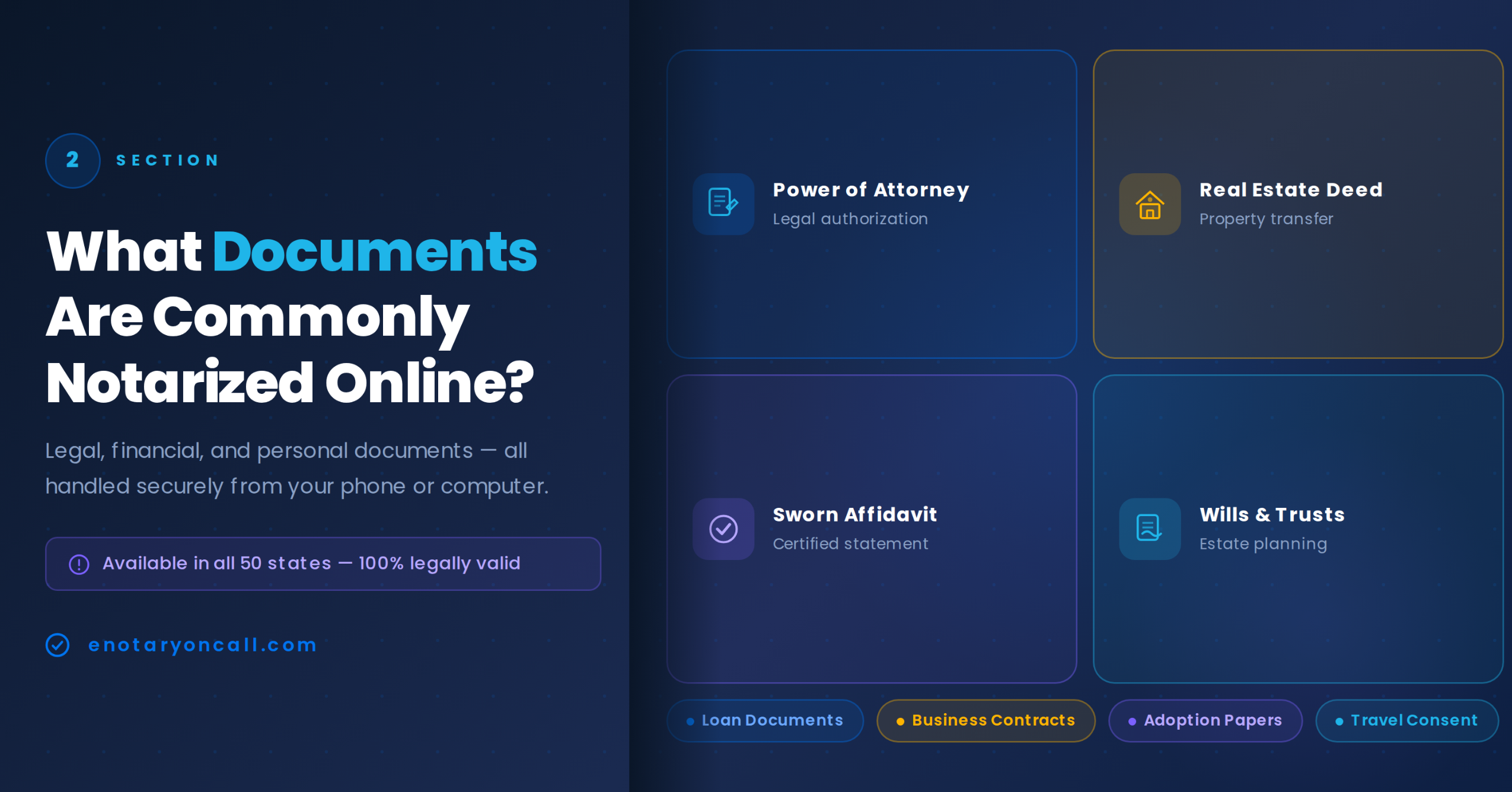
Examples often include –
- Affidavits
- Power of Attorney
- Consent forms
- Living Wills
- Advance Directives
- Financial authorizations
Why It Matters: Document eligibility depends on legal requirements, not simply where notarization happens.
Convenience: The Biggest Deciding Factor
Convenience affects more than comfort. It affects completion speed, scheduling, stress levels, and accessibility. Banks are best for existing customers, planned appointments, or local transactions.
At the same time, online notaries are best for remote users, urgent timelines, or flexible schedules. Always ask yourself: “Do I want to travel for this document?” That question alone often makes the decision easier.
Why More People Are Using eNotary On Call
Many users choose eNotary On Call to simplify the process. Benefits often include –
- Remote access
- Secure identity verification
- Flexible scheduling
- No branch visits
- Faster completion
Key Insight: For many people, the biggest advantage isn’t technology, it’s removing the unnecessary steps.
Common Mistakes to Avoid
- Assuming Your Bank Offers Notary Services – Not every branch participates.
- Waiting Until the Last Minute – Availability becomes more limited under pressure.
- Signing Before Meeting the Notary – Many notarizations require witnessed signatures.
- Ignoring Document Requirements – Some documents require witnesses in addition to notarization.
How to Decide Which Option Is Right for You: Bank Notary Vs Online Notary?
Choose a bank notary if –
- You prefer in-person interaction
- You already use that institution
- Your timing is flexible
Choose an online notary service if –
- Convenience matters most
- You want remote completion
- You need flexibility
- Travel feels unnecessary
The best option isn’t universal; it depends on how you value time, convenience, and process.
Final Thoughts
The better choice depends less on legality and more on experience when deciding between a Bank Notary and an Online Notary Service. A bank notary may feel familiar and straightforward if you prefer traditional in-person interactions and already bank locally.
Online notarization can remove unnecessary travel and make the process significantly easier if flexibility, speed, and convenience matter more. Many people discover that getting documents notarized becomes less about appointments and more about simply getting things done with eNotary on Call.
Frequently Asked Questions
1. Is a bank notary free?
Sometimes. Some banks offer complimentary notarization for existing customers, while others may charge fees or limit availability. Policies vary by institution and branch, so it’s worth confirming before making the trip.
2. Can anyone use a bank notary?
Not always. Some banks prioritize existing customers and may restrict notary services to account holders only. Availability may also depend on staffing and appointment schedules. Checking beforehand can prevent unnecessary delays and disappointment.
3. Is online notarization legally valid?
In many situations, yes. Online notarization follows structured identity verification and formal notarization procedures designed to support legal recognition. Acceptance may depend on document type and applicable rules, so it’s helpful to confirm requirements before starting.
4. Is online notarization faster than using a bank?
It depends on your preparation and availability. Many people find online notarization faster because it removes travel and reduces scheduling coordination. If your documents and identification are ready, the process can feel significantly more streamlined.
5. What documents work best with online notarization?
Documents such as affidavits, powers of attorney, consent forms, healthcare documents, and authorizations are commonly completed through online notarization. Specific requirements still vary, so checking document standards in advance is always recommended.