

 by
by Have you ever wondered what exactly happens to your assets or your healthcare decisions if an unexpected emergency strikes? When you start mapping out your future, comparing a living will vs living trust becomes one of the most important steps you will ever take.
These two legal documents sound incredibly similar, but they serve completely different purposes. Trust and Will released a 2026 estate planning report revealing a shocking reality. A full 56 percent of American adults have no estate planning documents whatsoever.
That means they have absolutely no financial protection and no medical directives in place. If you want to protect your family from painful legal battles and massive court fees, you must understand the exact differences between a living will vs living trust.
In this blog, we break down exactly how these documents work, why you might need both, and how you can easily notarize wills online from the comfort of your home via online notary Florida using eNotary On Call.
What is a Living Will?
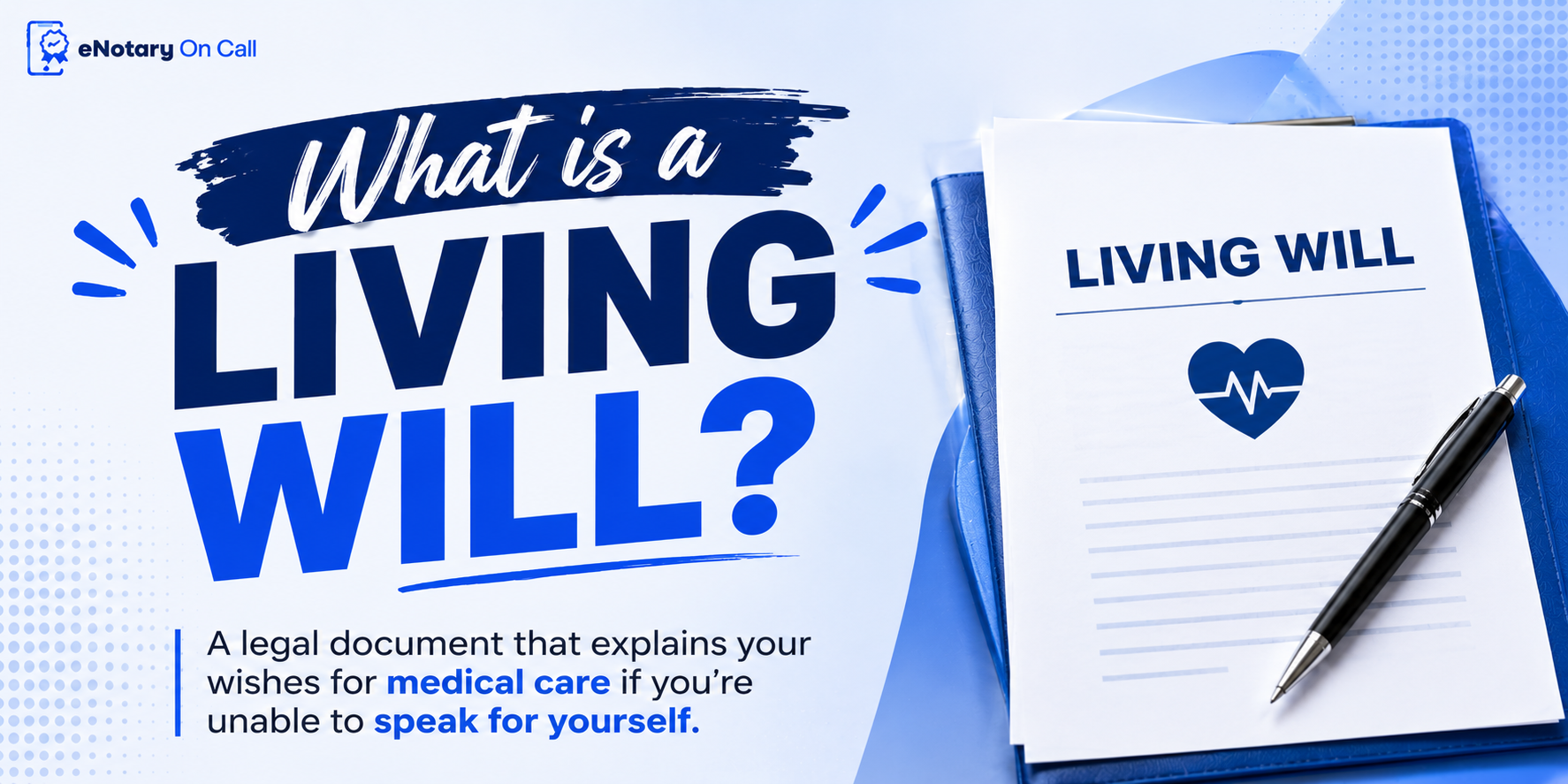
Before diving into complex comparisons, you must first ask, what is a living will? A living will is a legal document that outlines your specific healthcare preferences if you become incapacitated and cannot speak for yourself.
Doctors and hospitals rely on this document to understand your wishes. Asking what is a living will helps you realize that it has nothing to do with your money. It only protects your physical body and your medical choices.
Here are the primary healthcare decisions it covers:
- Life support choices and ventilator usage
- Tube feeding and hydration preferences
- Pain management protocols
- Organ donation wishes
Knowing exactly what is a living will gives your loved ones absolute peace of mind during highly emotional medical emergencies. Many people assume they only need medical directives, but you also need to manage your financial assets. This is where the living trust steps in.
Also Read – How Do I Notarize a Living Will or Advance Directive?
What is Living Trust?

A living trust is a legal arrangement you create during your lifetime to hold and manage your financial assets. Unlike a medical directive, a living trust specifically handles your property, bank accounts, and investments.
When comparing a living will vs living revocable trust, the main difference lies in control. A living revocable trust allows you to change or cancel the terms at any time while you are still alive. You act as the trustee. You maintain total control over your money.
After you pass away, the trust transfers your assets directly to your beneficiaries. This process helps your family completely bypass a lengthy and expensive probate court process.
Evaluating a living will vs living revocable trust shows that one handles healthcare while the other handles wealth. You cannot use a living will vs living revocable trust interchangeably because the legal system treats medical choices and financial assets separately.
Living Will vs Living Trust: Key Differences!
Let us look at a direct, side by side breakdown of these documents.
| Feature | Living Will | Living Trust |
| Primary Purpose | Directs medical and healthcare decisions | Manages financial assets and property |
| Takes Effect | When you become incapacitated | Immediately upon creation and signing |
| Probate Court | Does not apply | Bypasses probate completely |
| Privacy Level | Private medical document | Private financial document |
| Key Decision Maker | Healthcare Proxy or Surrogate | Trustee or Successor Trustee |
People often get confused when looking at a living trust vs will. A standard last will and testament only takes effect after you pass away. It tells the probate court how to distribute your property.
When you compare a living trust vs will, you see that a trust takes effect immediately while you are alive.
If you become incapacitated, your successor trustee can step in and manage your finances without waiting for a court order. A living trust vs will comparison also highlights privacy. A standard will become public record after your death, whereas a trust remains completely private.
Do You Need a Living Will and Trust?
Because these documents cover separate areas of your life, legal experts almost always recommend having a living will and trust together.
When you create a living will and trust, you build a complete safety net. The medical directive tells the doctors what to do, while the trust gives your family immediate access to funds to pay for that medical care. Setting up a living will and trust guarantees that your family will not face a judge just to make basic decisions about your health and your home.
Also Read – Medical POA vs Living Will: Do You Really Need Both?
The Role of a Living Will Attorney
You might wonder if you need to hire a professional to draft these documents. Speaking with a living will attorney often makes the process much smoother.
A qualified living will attorney knows exactly how to draft your medical directives so that hospitals accept them without hesitation. Furthermore, a living will attorney can ensure your documents comply with your specific state laws.
Once your living will attorney finalizes the paperwork, you must sign and properly execute the documents to make them legally binding.
How to Notarize Wills Online Securely With eNotary On Call?

RON Platforms like eNotary On Call allow you to notarize wills online using a secure video call. This digital process saves you hours of driving and waiting in waiting rooms.
When you choose to notarize wills online, the notary verifies your identity using advanced credential analysis and digital recording. This makes the document extremely secure and court admissible. eNotary On Call ensures everything meets state compliance standards perfectly.
How does the platform actually work?
eNotary On Call uses a streamlined four step process so anyone can easily and legally notarize their documents from anywhere:
Step 1: Upload Your Documents
First, you simply upload your drafted will, trust, or other legal documents directly to our secure platform. The system accepts standard file formats like PDFs and images for ultimate convenience.
Step 2: Verify Your Identity
Security remains the top priority. Before meeting the notary, you complete a quick identity verification process. This involves Knowledge Based Authentication (KBA) and biometric facial recognition that matches your live face to your government issued ID.
Step 3: Connect With a Live Notary
Next, you enter a secure, real time video session with a state certified online notary. The notary will confirm your identity, verify your willingness to sign, and watch you apply your digital signature live on camera.
Step 4: Download Your Executed Documents
Once the video session finishes, the notary applies their legally binding digital seal. You receive your fully executed, court admissible documents instantly via email, ready for immediate use.
State Specific Solutions for Estate Planning
If you live in the southern states, utilizing an online Notary Texas makes estate planning incredibly convenient. Texas law officially permits remote online notarization, meaning an online Notary Texas can legally witness your trust documents via webcam. An online Notary Texas requires secure identity proofing, which eNotary On Call provides seamlessly.
Similarly, residents in the sunshine state frequently search for an online notary Florida. Florida maintains specific requirements for vulnerable adults and witness procedures.
An online notary Florida through eNotary On Call understands these nuances. Connecting with a certified online notary Florida ensures your documents comply with all local electronic signature laws.
Also Read – How to Notarize Temporary Guardianship Forms Online?

Conclusion
Planning your estate does not have to feel overwhelming. By understanding the distinct differences between a living will vs living trust, you take the first vital step toward protecting your family. You need both medical and financial safeguards in place.
Do not wait for an emergency to strike before making these critical decisions. Draft your documents, consult a legal professional if needed, and use eNotary On Call to legally finalize your paperwork from the safety and comfort of your own home.
FAQs
1. How fast can I notarize my estate documents using eNotary On Call?
You can connect with a certified professional in less than ten minutes. The entire process of uploading your files, verifying your identity, and signing your documents happens instantly through our secure video portal.
2. Is it legal to use eNotary On Call for a medical directive?
Yes, remote online notarization remains fully legal in most states for estate planning documents. Our platform strictly follows the specific compliance guidelines your local jurisdiction requires.
3. Can I notarize my documents outside regular business hours?
Absolutely. eNotary On Call operates 24/7. You can access assistance at any time of day or night.
4. Does eNotary On Call provide witnesses?
Our platform supports adding your own witnesses to the video session easily.
5. Is my data secure with eNotary On Call?
Yes. We use AES 256 encryption. We protect your sensitive legal documents permanently.